







Thank you Freedes for creating this great render of our 1m2 space saving stair by EeStairs. Because it is difficult to take a picture in a small appartment the renders are a great way of showing our product. The style and design give the perfect finish to our pruduct. Great Job!
3D Furniture Rendering Services
Photorealistic furniture visuals for catalogs and e-commerce. Change the fabric, finish or color in minutes instead of reshooting the whole range.
- 10+ Years Experience
- 500+ Projects Delivered
- Fast Turnaround
3D Furniture Rendering Portfolio
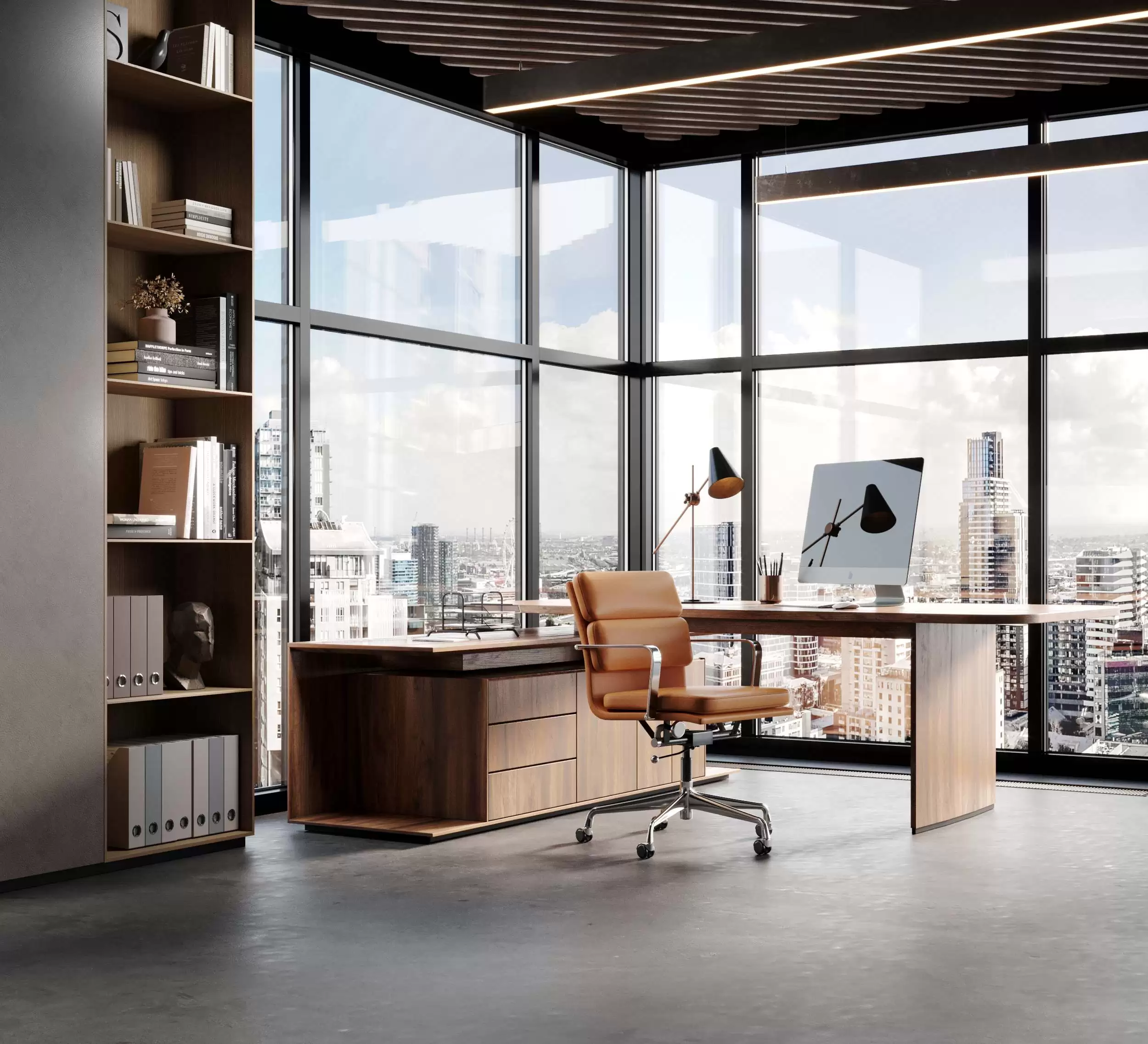
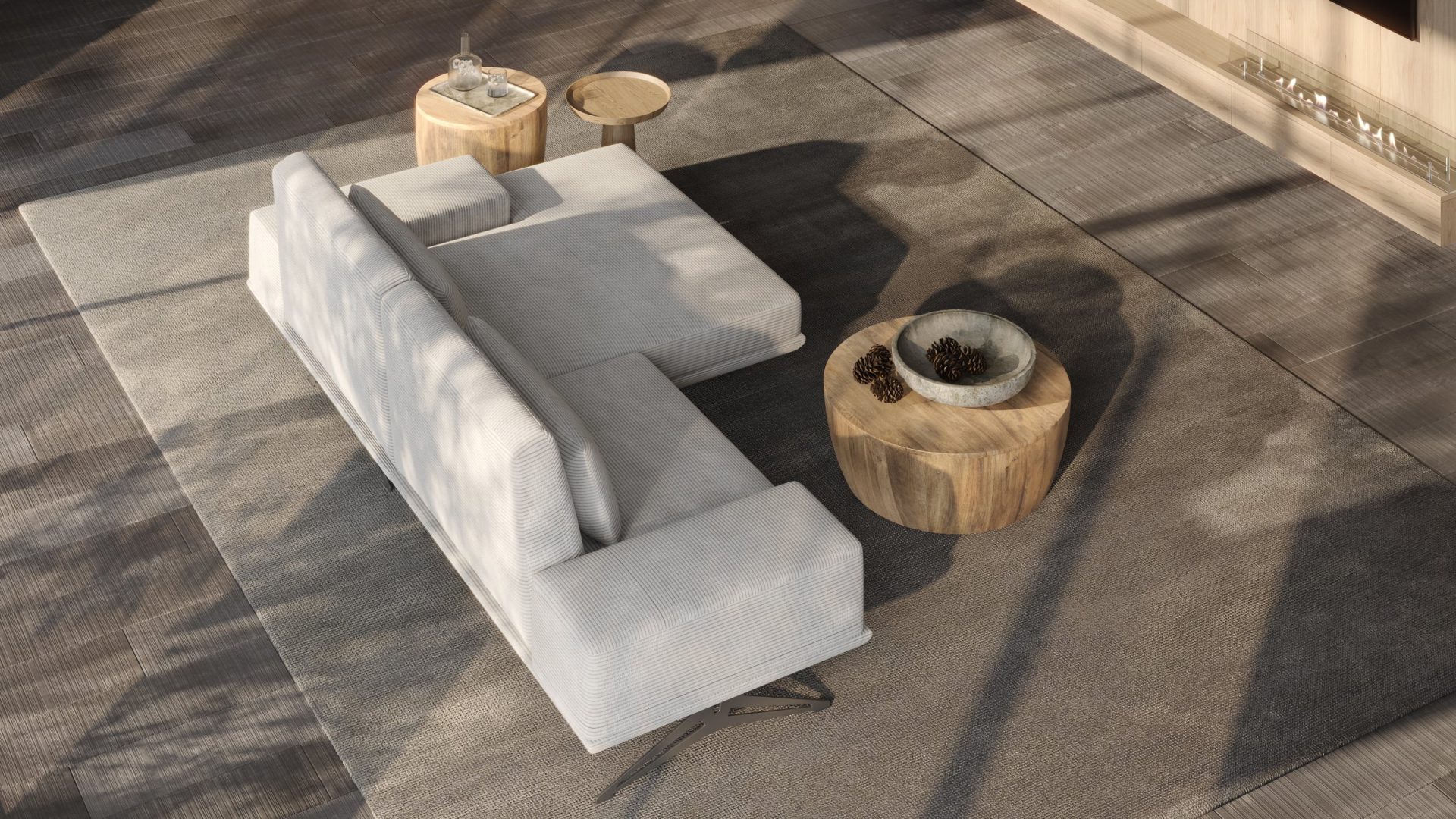
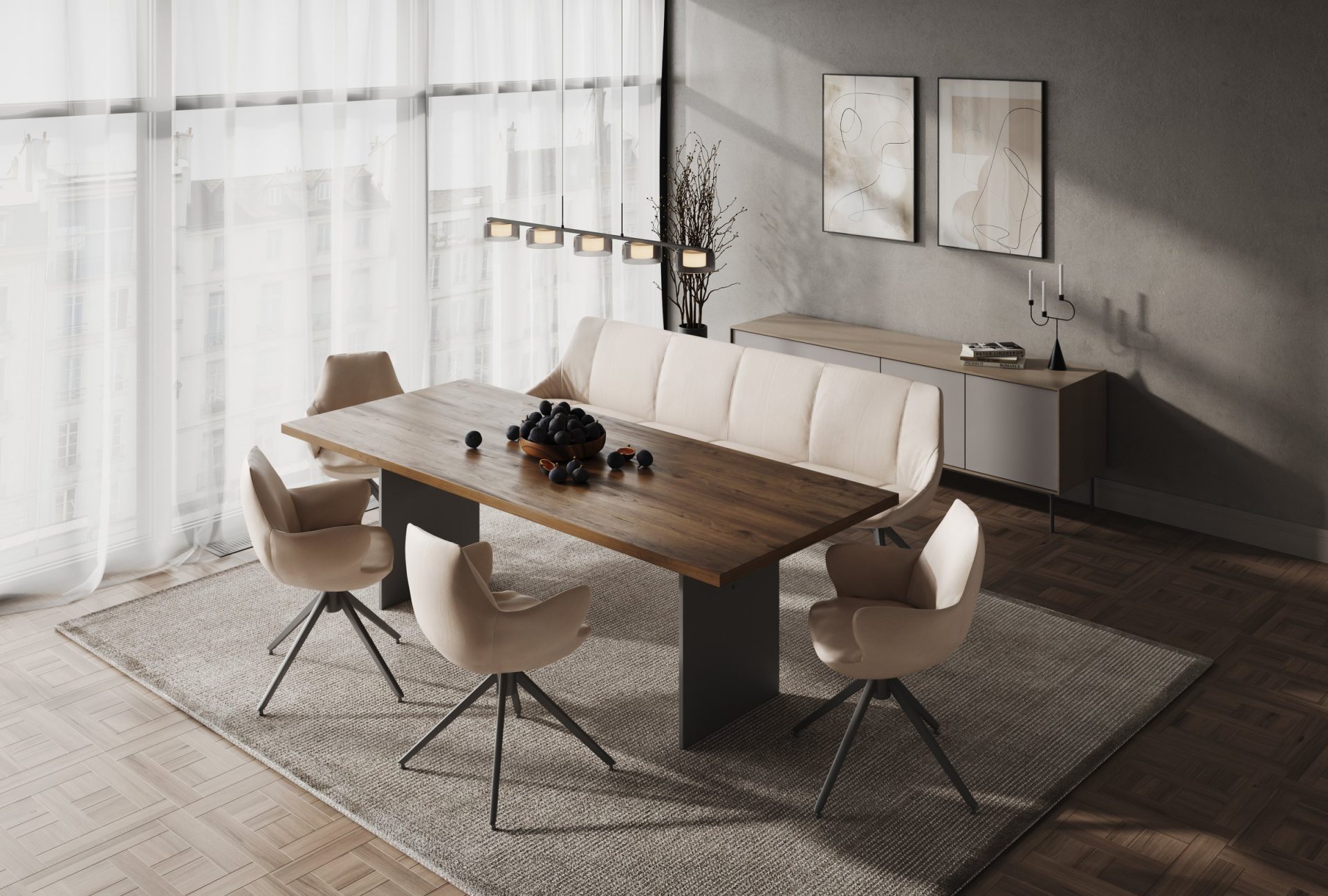
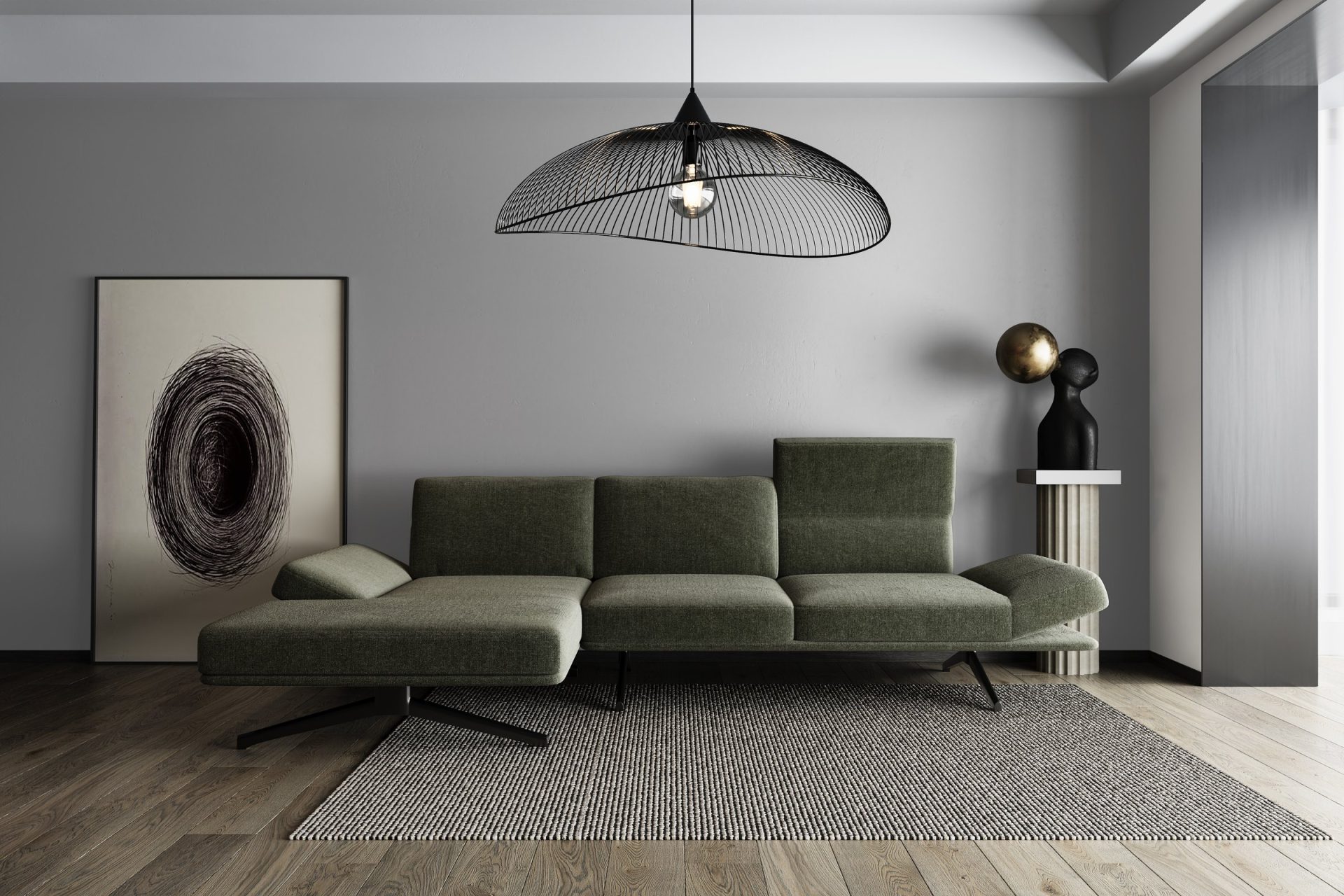
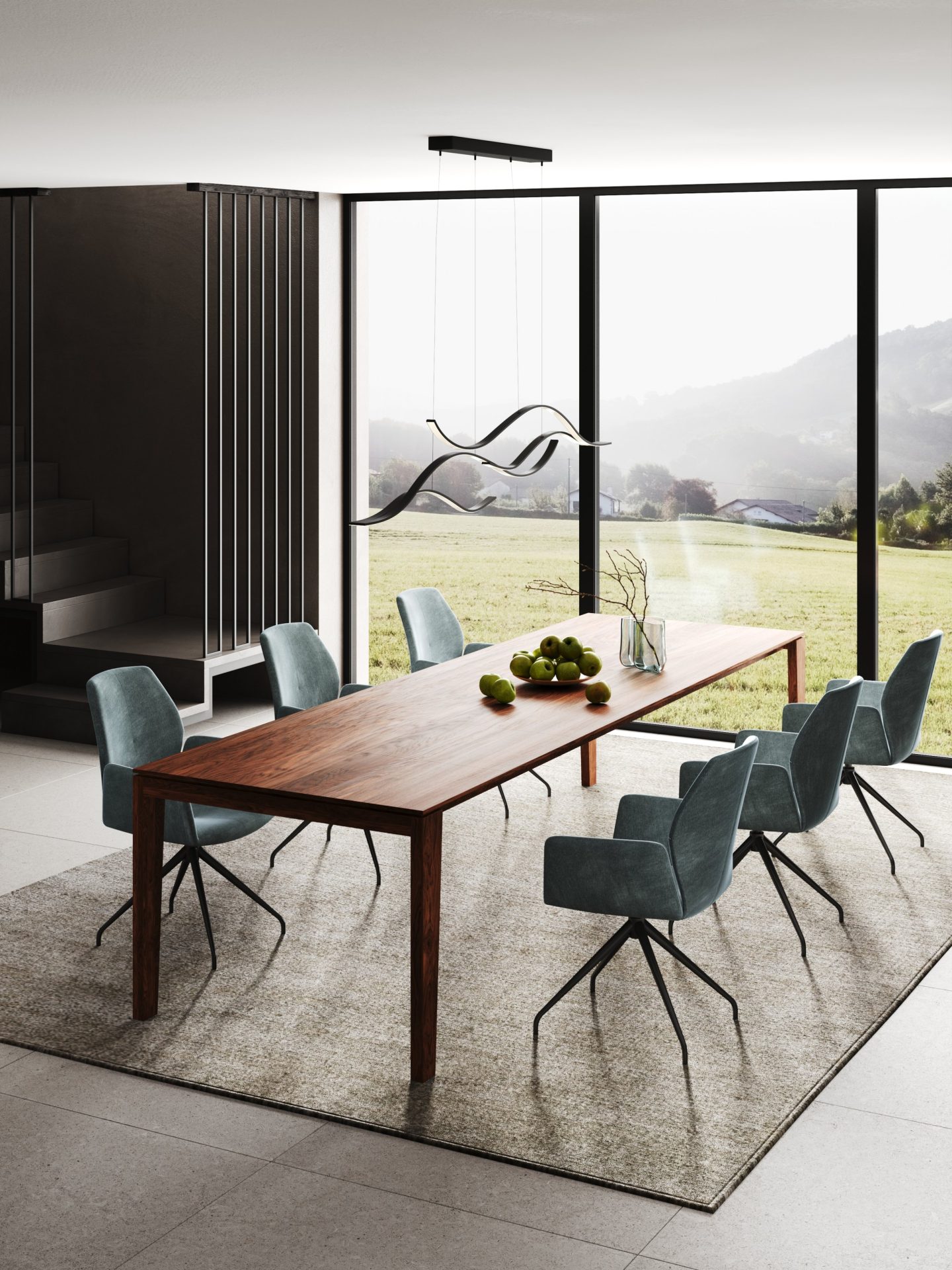
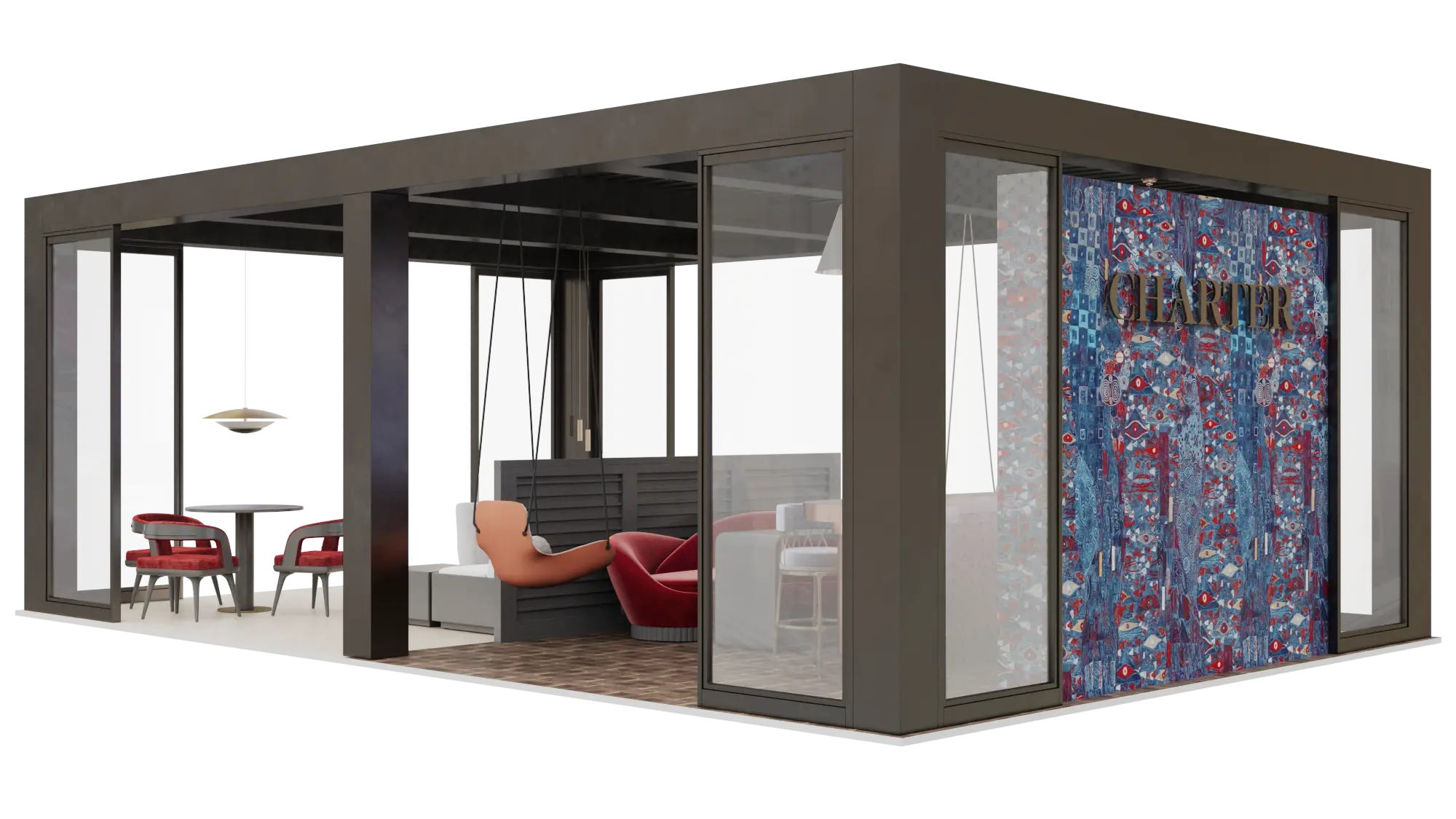
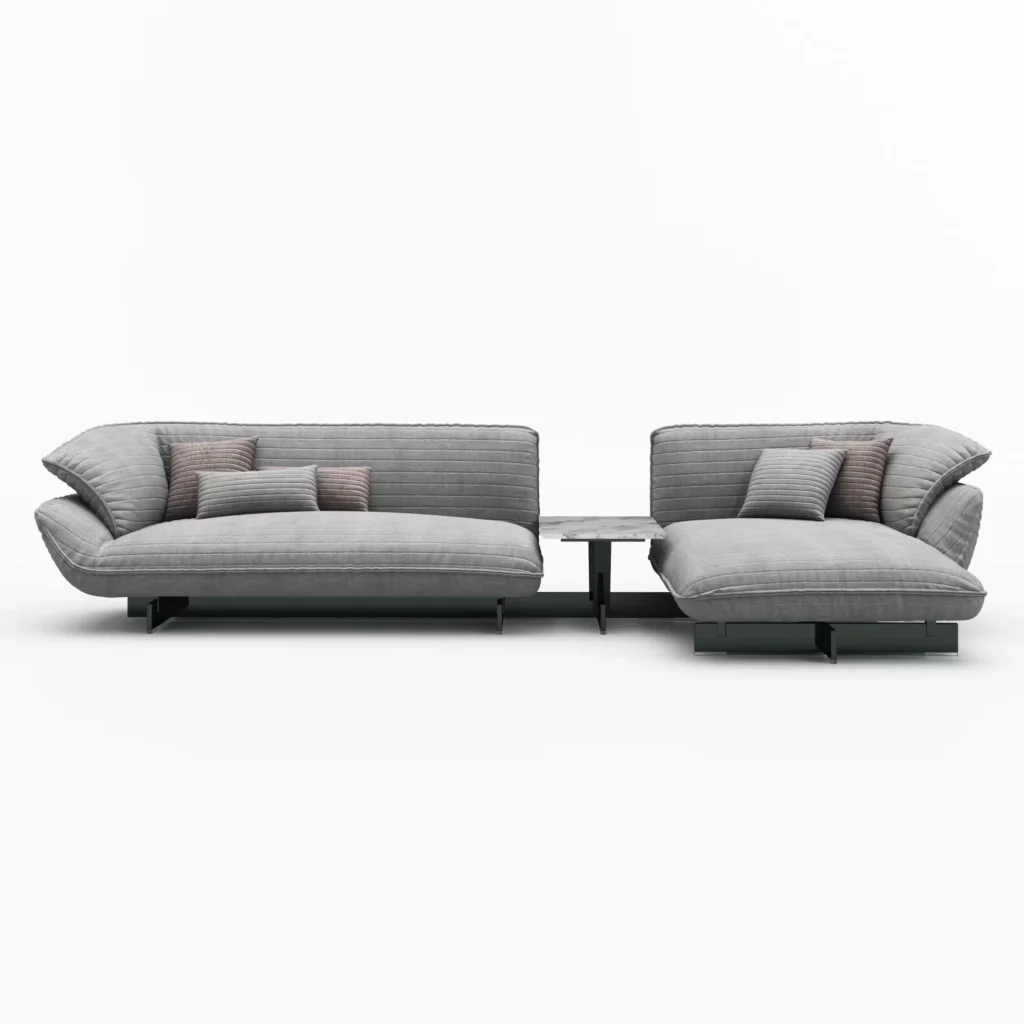
Recent furniture renders: sofas, a dining table and living-room sets for Möbel Portmann, and an office range for Laura Furniture, as room sets and as white-background packshots.


Our Clients
What Is 3D Furniture Rendering?
3D furniture rendering, also called furniture visualization, is a photorealistic image of a piece of furniture made from its drawings, CAD file or a prototype photograph, without the piece ever going to a photo studio. The model is built to the drawing, the real fabric, wood or metal is applied from your samples, and the piece is lit either on a white background for the shop grid or inside a styled room for the brochure. Once the master image is approved, every colorway, size and configuration comes from the same model.
That last part is the point for a manufacturer. A catalog used to require the furniture: prototypes, a studio, a photographer, and a reshoot every time a fabric changed. Rendering takes the prototype out of that chain, and the economics of producing a range change with it. Sofas, dining tables, beds, storage, office ranges and outdoor furniture all go through the same furniture 3D rendering process.
We have rendered furniture since 2010 for manufacturers, brands and retailers in the United States, including California, and in Europe, alongside our work for property developers.
Who We Work With
Furniture manufacturers and brands. The bulk of our 3D furniture rendering services goes to manufacturers: a range of five to fifty pieces, each in several fabrics and finishes, needed for the catalog, the website and the trade-show boards, usually before the first production run. For Möbel Portmann, a Swiss furniture retailer, we rendered four room scenes: the Wesley sofa by Koinor in a living room, the TERNI dining table with its chairs, the Finero sofa, and the Padua and Maruba sofas in an evening interior, each built from the manufacturer’s drawings and fabric references. For Laura Furniture we produced an office range in styled sets and on white.
Retailers and e-commerce stores. Shops that carry many brands use rendering to give the grid one consistent look: the same light, the same angle and the same crop across suppliers who photograph differently, on the store itself and on marketplaces such as Amazon and Wayfair. New products arrive as renders before the stock does.
Configurator and AR projects. When the customer builds the sofa on the website, every module, fabric and leg finish has to exist as an image or a model. The same master is reused across all of them. If the project is the model rather than the picture, see 3D furniture modeling.
Non-furniture products in the home and living category, such as lighting, fireplaces or bathroom fixtures, have their own page: product rendering. Furniture placed in a finished, sellable room rather than on its own is interior rendering.
Why Manufacturers Move Catalogs to CGI
Shoot the range before the range exists. Images can be produced from CAD while the first unit is still in tooling. Catalogs, trade-show boards and pre-orders all move earlier in the year, and a line that turns out not to sell can be dropped before it has been manufactured. For seasonal ranges that timing is often worth more than the cost saving.
Every colorway matches, because it is the same light. Variants are generated from one approved master, so forty SKUs share identical framing, lighting and scale. On a shop grid that consistency reads as quality before anyone has looked at a single product. Photography across several sessions never quite delivers it, and customers register the mismatch even when they cannot say what is wrong.
Cost per SKU falls as the range grows. The expensive part is modeling and material work on the first piece. Every additional colorway, size or configuration reuses it. For a range with many variants, and most ranges are mostly variants, the crossover against photography arrives quickly.
Any background, any crop, any format. The same piece is delivered on white for the grid, in a room set for the brochure, with transparency for a configurator, and re-cropped for whichever platform you add next year. None of that requires a studio, and none of it requires the physical item to still exist.
Getting the material right is the actual work. Weave direction, pile, seam and stitch, the sheen of oiled versus lacquered oak, the way a brushed metal edge catches light: these are built from the samples you send, not picked from a library. It is the difference between a render that looks like furniture and one that looks like a render, and it is where most of the effort on the first piece goes.
How We Work: Five Steps
1. Specification and references. We collect what the piece is: CAD or shop drawings, dimensions, fabric and finish samples, hardware details, and photographs of a prototype if one exists. For a catalog we also need the list of colorways and sizes up front, because a range is planned differently from a single hero image.
2. Modeling to the drawing. The model is built to specification and measured back against it. Seat height, arm thickness, panel gaps and radii are measured against the drawing. A chair an inch off looks plausible on its own and obviously wrong beside its real photograph on the same catalog page.
3. Fabric, finish and hardware. Materials decide whether the image looks like furniture or like a render. Each material is built from the real sample rather than a generic library material, and you see it on the piece in a color preview before anything else is produced.
4. Packshot or room set. A white-background packshot for the e-commerce grid and a styled room set for the brochure need different lighting, and we set them up separately. Packshots are lit for consistency across the whole range; room sets are lit for atmosphere. You approve one of each before the rest is produced.
5. Colorways and final renders. Once the master is approved, colorways and size variants are generated from it, so every item in the range matches in framing, light and scale. Files arrive named by SKU, in the resolutions your shop and your printer need, with transparent backgrounds where the platform expects them.
What a Project Includes
A furniture rendering project includes modeling from your drawings or CAD, material and fabric work built from the samples you send, hardware detail, lighting set up separately for packshots and for room sets, colorway and size variants generated from the approved master, and retouching.
- Deliverables. JPEG and PNG at the resolutions your shop and printer need, transparent backgrounds where the platform expects them, TIFF for print on request. Crops are supplied per channel, square for the grid and wide for the brochure, so the shop and the printer each get the file they need without cutting it themselves.
- Revisions. Two rounds are included on the master image of each piece. A change before the master is signed off is cheap; a change after it means regenerating the variants, so that is the stage to look at the image slowly.
- Confidentiality. An unreleased range is shown to nobody until you launch it, and if you want that in writing, an NDA is signed before the first file arrives. For a manufacturer producing catalog images months before a trade show, this is the normal arrangement.
3D Furniture Rendering Cost
Furniture is priced per piece and per image, and the figures below are the ones from our 3D rendering cost guide.
| Item | Price |
|---|---|
| Single product render, white background or simple setting | from $200; complex pieces with detailed upholstery $500–$800 |
| Furniture in a styled room set | from $500; a fully styled interior $1,000–$1,500 |
| Catalog and collection work, 50+ SKUs | $200–$300 per image with volume pricing |
What moves the price:
- Piece complexity. A tufted leather armchair with curved legs takes three to five times the modeling of a wooden stool.
- Materials. Wood grain, fabric weave, leather pores, metal brushing: each is recreated from the sample, so more materials per piece means more work.
- Variants. The same sofa in ten fabrics is far cheaper than ten different sofas; a material swap from an existing model costs a fraction of the first render.
- Packshot or room set. A styled interior scene costs two to three times a white-background image.
- Quantity. The more pieces in one order, the lower the cost per image.
Send drawings or CAD, the finish and fabric list and the number of SKUs. We reply within 24 hours with a per-item price and a schedule for the whole range.
Why Manufacturers Choose Freedes
- Built for ranges. The process is built around masters and variants, so a fifty-SKU catalog stays consistent and gets cheaper per image as it grows.
- Materials from your samples. Fabric, leather, wood and metal are matched to the physical swatch you send. It is the part of the job we spend the most time on.
- One team from the first SKU to the last. The artists who set up the master image of a piece render every colorway of it, so a range of forty items reads as one catalog, and the next range you send lands with people who already know your finishes.
- Named by SKU, ready for the platform. Files arrive in the crops, formats and naming your shop, printer and configurator expect.
- Work you can see. Möbel Portmann and Laura Furniture in the selection above, more in the portfolio.
 Next
3D Furniture Modeling Services
Next
3D Furniture Modeling Services
What Our Clients Say
-
-
The finished renders were spectacular and done well within our deadline as promised by Freedes.
Clutch View on Clutch -
Freedes Studio has completed a variety of interior and exterior renderings on our behalf. All have turned out fantastic! Flexible in the feedback and revisions stage and very responsive. Highly recommend!
3D Furniture Rendering FAQ
What is 3D furniture rendering?
A photorealistic image of a piece of furniture produced from its drawings or CAD model, with the real materials applied from your samples, on a white background or in a styled room. It replaces the photo studio for catalogs, e-commerce and marketing.
What is furniture rendering used for?
Product catalogs, e-commerce listings, configurators, trade-show boards, dealer presentations and marketing, and for approving a design before the first unit is manufactured.
What do I need to send you?
Drawings or CAD, dimensions, fabric and finish samples or references, hardware details, and photographs of a prototype if one exists. For a range, the list of colorways and sizes up front.
Can you build the model from drawings or photographs alone?
Yes. Most furniture projects start from 2D drawings; a prototype photograph and a tape measure are enough for simpler pieces, though clean CAD shortens the job.
Can you show the same piece in different fabrics and finishes?
Yes, and that is the main reason manufacturers render. Variants are generated from the approved master, so they match in framing, light and scale, and each additional colorway costs a fraction of the first image.
What kinds of renders do you produce?
White-background packshots for the grid, styled room sets for the brochure and the website, close-up detail shots of stitching and finishes, 360° spins and product animation, and model exports for configurators and AR.
How long does a project take?
A simple piece takes a few business days; larger collections take longer. For a range, the master images come first and the variants follow quickly, and the schedule for the whole range is confirmed with the quote.
How much does 3D furniture rendering cost?
A single product render starts at $200 and reaches $500–$800 for complex upholstered pieces; a styled room set starts at $500; at fifty SKUs and more, volume pricing brings the cost to $200–$300 per image. The per-item price comes with the quote.