We were impressed with their ability to deliver consistently on time and within budget.
Clutch
View on Clutch


Let’s
Connect
Get the Best Price Today
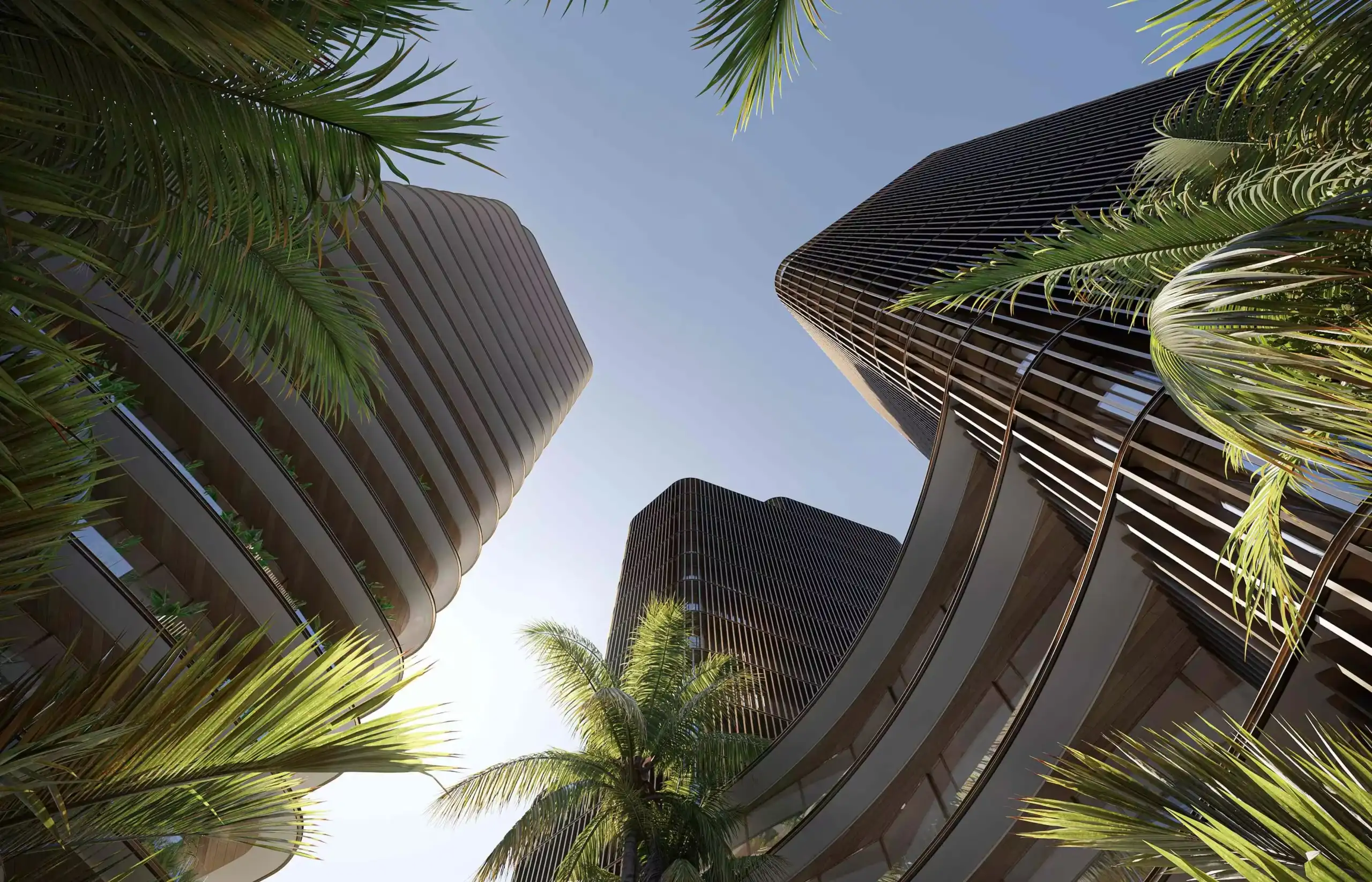
Films rendered from the drawings before the building exists: a walkthrough of the interior, a flythrough of the site, a story about the whole development. From $2,000 for 30 seconds.




3D architectural animation is a film rendered from the model of a building before the building exists. The camera walks through the apartment, rises over the site, follows a visitor from the street to the lobby, and every frame is a full rendering with materials, light, planting and people. The result runs on a website, on a sales-center screen, in an investor deck and in a paid ad, cut to the length each of those needs.
A walkthrough is the kind of animation that moves through a space at a person’s pace: entrance, living room, kitchen, balcony. A flythrough is the kind that leaves the ground and shows the site. A development film puts both together with titles and a soundtrack. They are made in one production line, from the same drawings and the same model that produce the still renderings, and we have made them for developers since 2010.
Developers. A film is the fastest way to explain a development to someone who will never read the plans: the buyer abroad, the investor with ten minutes, the family scrolling on a phone. One sequence, rendered once, becomes the website hero, the fifteen-second ad and the silent loop on the sales-center screen. The promo reel for Baymont in Miami Beach was cut vertical for Instagram and TikTok first and the sales gallery second.
Architects and planners. For a design review or a public hearing, a flythrough explains the massing and the site in ninety seconds and holds a room’s attention in a way a slide of elevations does not. It is built from the same model as the exterior renderings, so the two agree in every detail.
Brokers and leasing teams. Offices and retail space are leased on circulation: how people arrive, where they pass, what they see from the escalator. A walkthrough shows it in a minute. Fitted and shell versions of the same route let a landlord market the space to tenants with different fit-out plans.
Manufacturers. Short films built around an object: a turntable, a slow orbit, a close pass over material and stitching, a piece assembling itself. They come from the same models as the product renderings and go to launches, trade shows and product pages.
Sequence and scale become obvious. A viewer understands an apartment when the camera walks it: the entrance, the turn, the moment the living room opens up, the view from the balcony. No set of stills conveys that order, and no plan conveys what a ten-foot ceiling feels like as you pass under it. Off-plan buyers are asked to commit to a space they cannot visit; motion is the closest thing to letting them.
One route, many cuts. The sequence is rendered once and then cut to whatever each channel needs: ninety seconds for the website, fifteen for a paid ad, a vertical crop for social, a silent loop for the sales-center screen. You pay for the render, and new cuts later do not mean going back to production.
Approval happens before the expensive part. You sign off the camera route on a gray animatic and the look on a handful of still frames. By the time the sequence goes to render, nothing is left to argue about. This is the single biggest reason a film lands on budget: the costly stage starts only after the cheap stages are agreed, and a change of mind about the route costs an afternoon.
Grade and sound are part of the product. A film that stops at the raw render looks unfinished, and viewers read that as the project being unfinished. Color grading holds one look from first frame to last, and music or ambient sound carries the pacing so the film does not feel like a screen recording. Both are included.
When a film is the wrong tool. If the brochure cover needs one strong frame, a still does the job for a fraction of the price. If the buyer wants to look around at their own pace, a 360° virtual tour beats any edit. We tell you which format the brief needs before we price it.
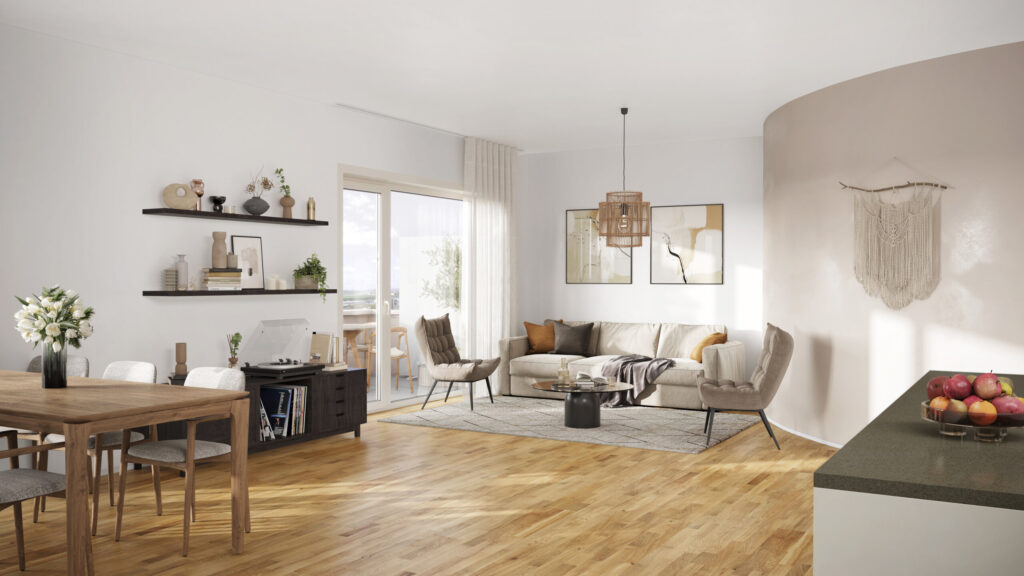
Walkthrough rendering is the interior film: a camera moving through an apartment, a house, an office floor or a hotel at walking pace, so the viewer experiences the space in the order a visitor would. It is the format developers order most for off-plan sales, because the sequence of rooms is exactly what a floor plan cannot convey, and it is the most demanding one to dress: every room the camera enters needs real furniture, materials and styling, and the light has to hold from one room to the next.
A 3D rendering walkthrough starts from the drawings or a model and the finish schedule. We agree the route and the running time first, because a sixty-second listing film and a three-minute investor presentation are different products. The route is then dressed only where the camera actually looks: a room it never enters does not need a finished interior, which is what keeps a walkthrough affordable without letting it look cheap. The interior renderings of the unit come out of the same scene, and still frames pulled from the sequence usually replace the need to commission separate hero images.
A camera walking a unit at human pace, room to room, for listings, sales centers and investor decks. Sixty to ninety seconds is the usual length; the same render is cut shorter for ads and social.
The camera approaches the building the way a visitor would, from the street, through the entrance, across the courtyard, or circles it from the air. These films carry landscaping, context buildings, sky and weather, and they are what planning boards and investors ask to see first. The context model also serves the aerial view renderings of the same project.
When the story is larger than one route: several buildings, aerial passes, cuts between locations, titles, a voiceover and a soundtrack. Two to three minutes for a launch event or an investor meeting, with a short cut for the website.
Shopping centers, hotels, offices and mixed-use ground floors, where the film has to show circulation and the view from the escalator. Fitted and shell versions of the same route are common.
Turntables, orbits, close passes and assembly sequences, ten to thirty seconds, from the models already built for the catalog images.
1. Route and storyboard. A film needs a script before it needs pictures. We agree the camera route, where it enters, what it passes, where it slows, where it ends, and how long the whole thing runs. The shot count, the schedule and the fixed price are confirmed here, before any modeling starts.
2. Gray animatic at final length. You see the entire film as gray geometry, cut to its real running time, with the real camera moves. Nothing is dressed and nothing is lit. This is the cheapest possible version of the film and the right moment to say that a move is too fast, a corner is cut too tightly, or the ending should land on the kitchen instead of the hall.
3. Dressing the approved route. Once the camera is locked we furnish and detail what it actually sees. A facade it passes in two seconds does not need the detail of a hero still; a living room it lingers in does.
4. Look development on still frames. Lighting, materials and mood are approved on a handful of frames pulled from the route. A still can be laid next to another and marked up; moving footage cannot. Once those frames are signed off, the sequence is rendered to match them.
5. Render, grade and cut. The sequence goes to the render farm, then through color grading and the edit, with music or ambient sound if you want it. You receive the film in the formats you publish in, horizontal for the site, vertical for social, plus a high-bitrate master to keep, and the still frames pulled from it for print and listings.
| Length and type | Project price |
|---|---|
| 10–15 s product turntable | from $500 |
| 30 s product video | $1,000 – $2,000 |
| 30 s architectural flythrough | from $2,000 |
| 60–90 s cinematic walkthrough | $5,000 – $10,000+ |
The figures are per project and match the 3D rendering cost guide, where the same numbers are also converted per minute of finished film, so a quote can be lined up against either.
What drives the figure:
Tell us the running time, what the camera should pass and where the film will be published. With drawings or a model in hand we send a fixed price and a schedule within 24 hours.
 Next
360° Virtual Tour Services
Next
360° Virtual Tour Services
We were impressed with their ability to deliver consistently on time and within budget.
Their consistency in providing top-tier services is impressive in the workflow.
Freedes Studio has been fantastic to work with, especially Aelita. In a relatively short amount of time, I've already trusted them with several new construction projects, and the experience has been excellent. The turnaround time is consistently quick, the quality of the renderings is great and their attention to detail really stands out. Whenever I have comments or revisions, they are addressed quickly and thoughtfully, which makes the entire process very easy and efficient. As I continue to grow my company and brand as a home builder, Freedes Studio has been a great partner in helping me shape the visual identity of our homes and how I want our brand to be presented to the market. I truly appreciate Aelita and the entire Freedes Studio team for their continued help, responsiveness, and support. I look forward to working together on many more projects.
A film rendered from the model of a building before it is built: the camera moves through and around the project, and every frame is a full rendering with materials, light, planting and people. It is used for launches, investor presentations, hearings, listings and ads.
A walkthrough is one kind of animation: the camera moves through a space at a person’s pace and sells the experience of being inside. A wider animation can leave the ground, cut between locations and tell a story about the whole development. Both are made the same way, and one film can contain both.
Off-plan sales, where the sequence of rooms is what a plan cannot convey; leasing of office and retail floors; hotel and amenity previews; and the sales-center screen, where a silent loop runs all day.
Drawings or a model, the material and finish schedule, and a sense of the running time and where the film will be published. A reference video or a storyboard helps set the direction, but is not required.
Yes. We work from your 3D or BIM file and refine it where the camera gets close. From drawings alone we build the model ourselves.
It depends on the running time, the number of spaces the camera enters and the level of detail. A thirty-second flythrough takes a few weeks; a two-minute development film takes longer. The schedule is fixed together with the price.
Yes, and the process is built around it: the route is approved on the gray animatic and the look on still frames before the expensive render starts. Two rounds are included at those stages.
From $500 for a product turntable, from $2,000 for a thirty-second architectural flythrough, and $5,000 to $10,000 or more for a sixty- to ninety-second cinematic walkthrough. Running time, what the camera sees and the resolution set the figure.
Freedes Studio: The Choice of Companies