What Is a 3D Floor Plan?
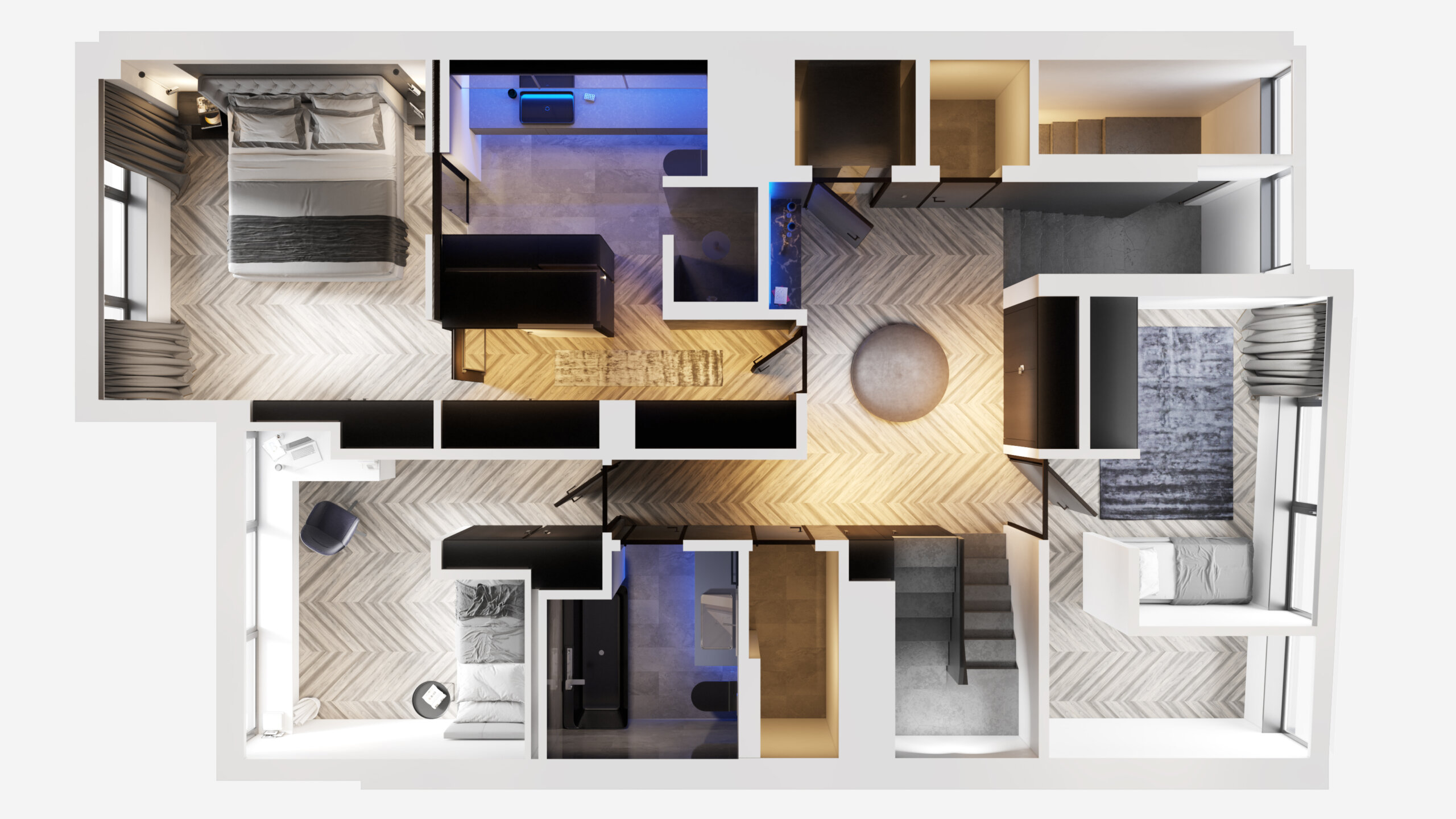
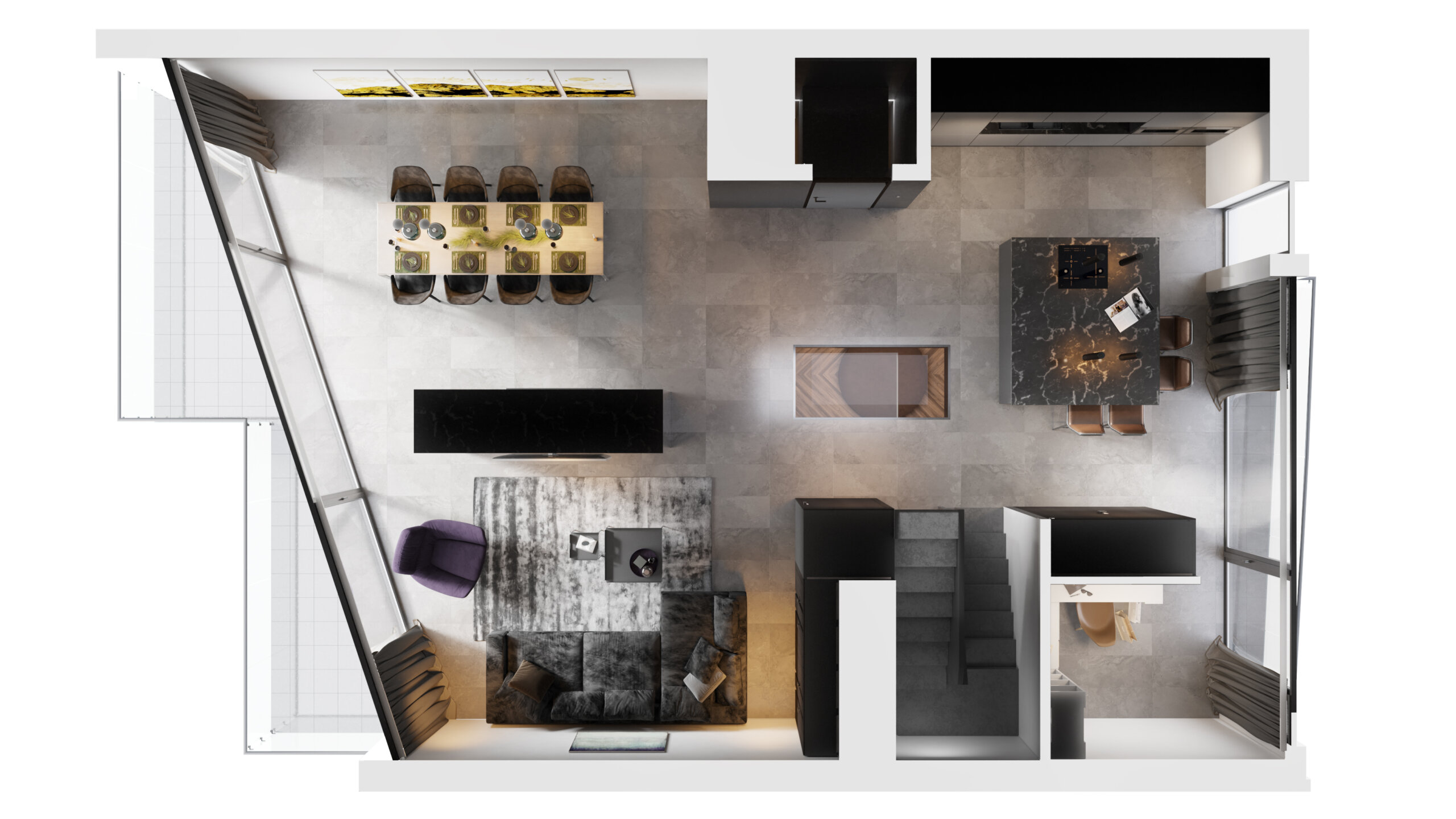
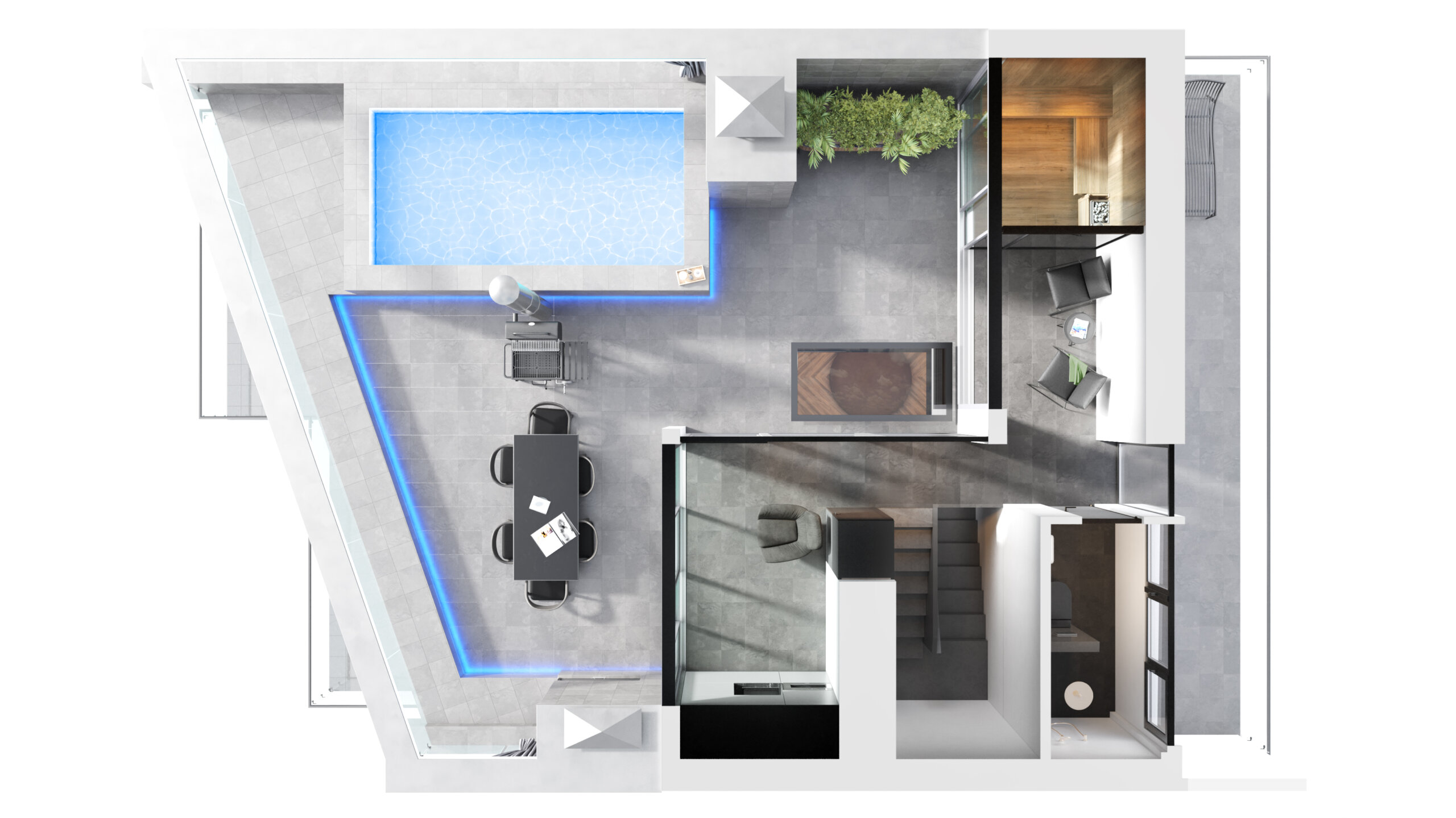
A 3D floor plan is the layout of an apartment or a house drawn as a picture rather than as a document: walls with height, doors and windows in place, flooring and finishes, and furniture at its real size, seen from above at a slight angle. A 2D plan is for people who read drawings. A 3D floor plan is for everybody else, and everybody else is who is buying.
We build both from the same file. The 3D version goes on the listing and in the brochure; the clean 2D version, with dimensions, room areas and a north arrow, goes into the technical pack and the contract. Because they come from one drawing, they never disagree, which matters when a buyer compares the brochure with the contract drawings and matters more when a lender does.
Floor plans have been part of our work for developers since 2010; most orders are sets for a whole building, with every unit type in both versions.
Who Orders Them
Developers and sales teams. A set of plans for every unit type in the building, furnished for the listing and clean for the price list, produced from the architect’s drawings before the sales launch. When unit layouts change late, which they do, the plan is edited rather than redrawn. Plans sit beside the site plan and the residential renderings in the sales pack, and share their numbering.
Real estate agents and brokers. A furnished 3D floor plan for a listing, from the seller’s drawings or a measured sketch, delivered in the crops the portals use. For a home that is built and empty, the plan and a set of virtually staged photographs together answer both questions a viewer has: what the layout is, and what it feels like furnished.
Architects. Plans for client presentations and design review, drawn to the same dimensions as the documentation, so a client who does not read drawings still understands the layout. For the finished look of a room, the next step is an interior render; for the building on its street, an exterior one. Both are on our 3D rendering services page.
What a 3D Floor Plan Adds to a Listing
Understood in seconds. Buyers scrolling a portal do not decode hatching, door swings and dimension strings. A 3D plan shows walls with height, furniture in place and rooms in relation to one another, so the layout registers before anyone decides whether to keep scrolling.
Furniture proves the room works. The most common objection to a floor plan is never spoken: will my things fit. A furnished plan answers it with a bed, a table and a sofa drawn to real dimensions. An honest plan also outperforms a flattering one; a room furnished with undersized props sells a showing that ends in disappointment, and the buyer remembers who showed it to them.
One drawing, several outputs. The same plan is delivered as a top-down view for the portal, a cutaway perspective for the brochure and a clean 2D version for the technical pack. Furnished and unfurnished variants, with and without dimensions, come from the same file, so marketing and sales are never working from different drawings.
Areas that hold up when checked. Plans are built from your drawings to real dimensions, so room areas and the overall floor area match the documentation rather than being sketched to look right. That matters when a buyer measures with a tape at the showing, and considerably more when a lender or an inspector does.
Where the plan sits in the set. A floor plan explains the unit. 3D interior rendering sells the feel of it, 3D exterior rendering shows the building it sits in, and architectural rendering carries the project through approvals and the investor deck. Produced by one team from one set of drawings, the four never contradict each other; produced by four suppliers, they usually do.
Types We Produce
Furnished 3D floor plans
The version most listings use: walls with height, furniture drawn to real dimensions, flooring and finishes, seen from above at a slight angle. The furniture is the point; it answers the question a 2D plan leaves to the imagination.
Cutaway and dollhouse views
A whole house shown with the roof and one wall removed, so several floors read at once. These sell family homes better than a flat plan, because the buyer sees the relationship between the kitchen downstairs and the bedrooms above. They pair with house rendering for the outside of the home.
Clean 2D plans for the technical pack
The measured version: dimensions, room areas, north arrow, no styling. Produced from the same file as the marketing plan, so the two never disagree.
Building and development plans
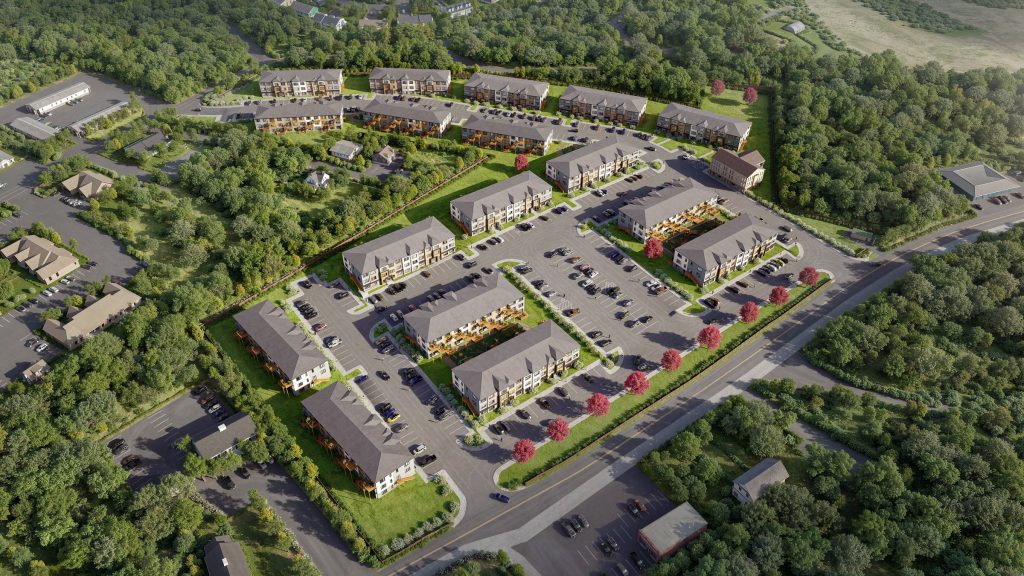
Whole-floor plans for apartment buildings and offices, showing unit positions, cores, circulation and orientation. On a development they sit beside the site plan and share its numbering and color coding, so a buyer can move from the development to the building to the unit without relearning the drawing.
Plans for homes that are already built
Where the property exists and stands empty, a plan is drawn from a measured sketch or the original permit drawings, and paired with virtual staging of the photographs. Together they cost a fraction of a photoshoot with rented furniture.
How We Work: Five Steps
1. Drawings and scope. You send CAD files, PDFs or a measured sketch. We agree on what the set covers: which levels and unit types, furnished or clean, 2D, 3D or both, and where the plans will be used: a portal listing, a brochure or large-format print.
2. Base plan and dimension check. Walls, openings, stairs and fixed elements are drawn from your drawing, and the resulting areas are checked against it. Where the drawing contradicts itself, you get a question rather than our guess.
3. Furnishing and finishes. Furniture goes in at true scale, with flooring, a palette and the few props that make a room read as somewhere people live. This is the stage that shows whether the layout works, to you first and to the buyer later.
4. Labels, areas and your corrections. Room names, areas, the north arrow and the legend go onto the plan. You mark up what needs changing, a moved wall, a different sofa, a renamed room, and the corrections are made in one pass.
5. Final set and formats. You receive the finished plans in the sizes and formats the set was scoped for: web-ready images for the listing, high-resolution files for the brochure, and the source layout if you expect to reuse it. Two revision rounds are part of the price.
Floor Plan Cost
| What | Price per plan |
|---|
| Starting price | from $200 |
| Typical range | $200–$800 |
The same figures are published in our 3D rendering cost guide. For a development with many unit types, plans are quoted as a set rather than one at a time, and the set costs less per plan than isolated orders.
What moves the price:
- Floor area and room count. The main driver.
- Furnished or empty. Furniture, styling and flooring add work per room.
- Number of unit types. A set from one building costs less per plan than isolated commissions.
- View type. A straight top-down plan is quicker than a cutaway perspective.
- Drawing quality. CAD is fastest; a scanned sketch is slowest.
Send the architectural plans, ceiling heights and a note of which rooms should be furnished; a per-plan price and the schedule for the set come back within one business day.
Why Developers Order Plans From Freedes
- One team for the whole sales pack. Plans, renders, the site plan, 360° tours and the 3D animation come from one team and one set of drawings, so numbering, finishes and layouts agree everywhere. That is how a real estate development marketing agency is supposed to work, and it is what we are.
- Real dimensions, every time. Built from the drawings rather than traced, so the areas survive a tape measure and a lender’s check.
- Late changes are edits. A late layout change is an edit to the existing file, which matters on buildings where unit plans move after launch.
- Drawn by the people who render the units. The plan and the unit renders come from the same artists and the same drawings, so the sofa in the plan is the sofa in the render and the kitchen is on the same wall in both.
- Private until launch. Plans for an unreleased development stay confidential, and an NDA is signed whenever you ask for one.