Commercial Real Estate Marketing: How 3D Rendering Drives Pre-Leases
- Ziņas autors Autors: seohighwaytotop
- Publicēšanas datums 13.09.2026
Pre-leasing is the single most important number on a commercial development’s capital stack. Lenders release construction funds against it, investors underwrite returns from it, and anchor tenants set the tone for the rest of the building based on who signs first. But pre-leasing means selling something that does not exist yet – an office tower without walls, a retail podium without floors, a warehouse without a roof. The tenants writing seven-figure lease commitments need to see the space, and that is where 3D rendering has quietly become the highest-ROI marketing tool in commercial real estate.
This guide covers how 3D rendering drives measurable pre-lease conversions, which assets carry the most weight with tenant reps, and how to build a visualization package that closes deals before certificate of occupancy.
Why Pre-Leasing Matters More in 2026
Commercial developers face a stricter capital environment than in the last cycle. Lenders now require 30–50% pre-leasing before releasing construction draws on office and mixed-use projects. Anchor tenants demand price protection and TI packages in exchange for early commitment. And competing developments in the same submarket often break ground within months of each other – the project that shows the space first wins the lease.
The old approach – a floor plan PDF, a broker’s spec sheet, and a promise – no longer converts sophisticated tenants. Corporate real estate teams evaluate five to fifteen options before signing a 10-year lease, and the shortlist is built from what they can visualize.## The Pre-Lease Marketing Challenge
A tenant rep or in-house corporate real estate director needs three things to shortlist a building:
- Confidence the space will match the pitch. Every detail – ceiling height, column grid, natural light – must be visible.
- A brochure their executive committee will approve. Board decks need images that survive projection at 4K in a boardroom.
- Something they can share. Renderings that live comfortably on LinkedIn, in an RFP response, and on a tour deck.
Static floor plans and specification sheets fail all three tests. Photography of a similar building fails the first. A live construction site fails all of them.
How 3D Rendering Closes the Gap
Photorealistic 3D rendering answers each of those needs simultaneously:
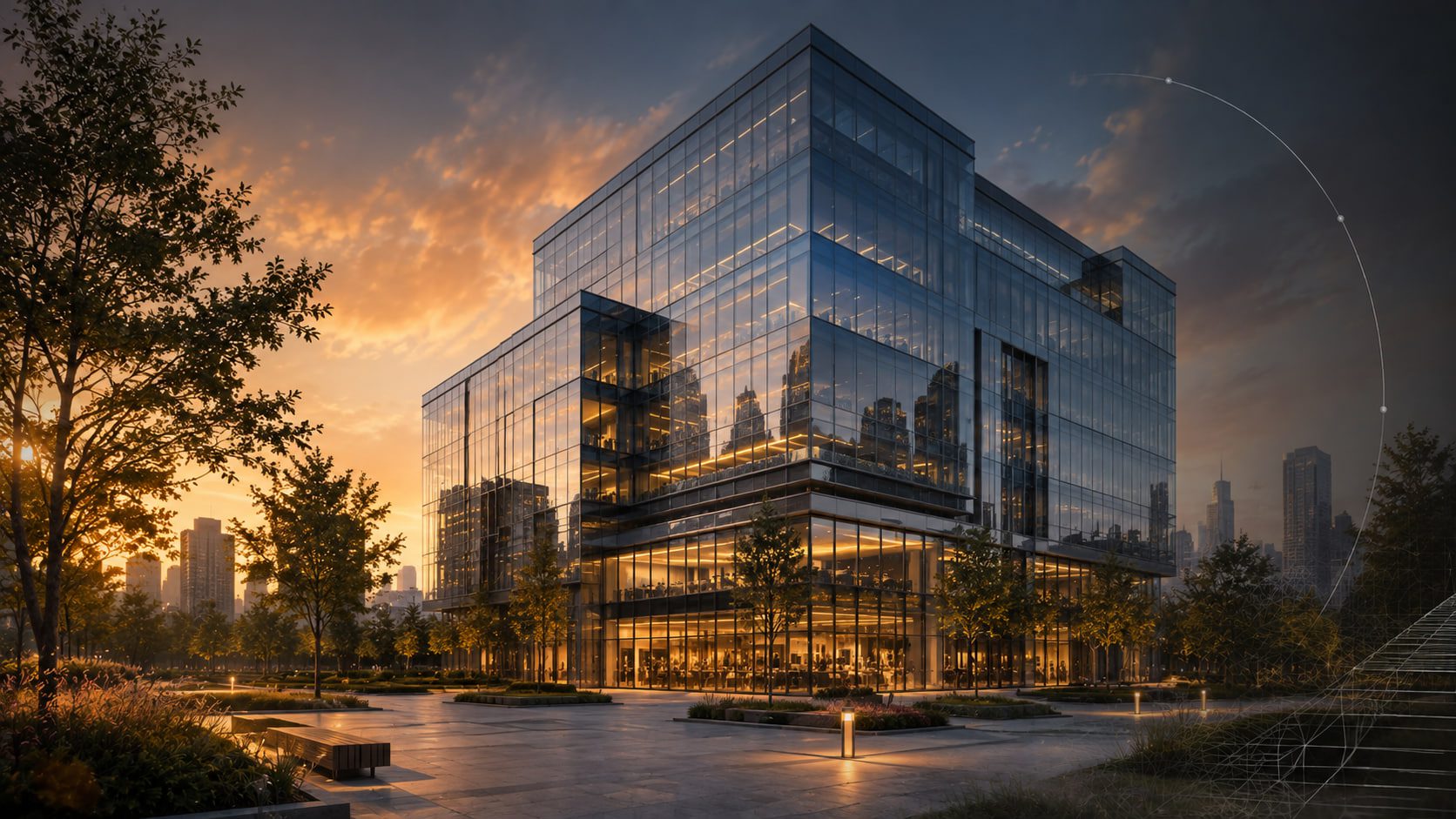
- Spec-accurate visuals. Every column, ceiling height, and window mullion matches the actual construction drawings.
- Contextual environment. The building shown in its real site, with real neighbors, real skyline, and real solar orientation.
- Multiple use cases per render. The same 3D asset produces exterior hero images, interior floor tours, tenant fit-out options, amenity previews, and animation flythroughs.
- Consistency across the campaign. The rendering pipeline delivers matched assets from teaser email to signed lease – no visual mismatch between what the tenant saw and what they signed.
Developers using rendered marketing packages report shortlist inclusion rates 2–3x higher than spec-sheet-only pitches, and pre-lease closings months ahead of comparable projects marketed the traditional way.
Assets That Move the Needle
Commercial pre-lease campaigns need a specific asset stack. Each asset does a different job:
Asset | Purpose | When to Deliver |
Exterior hero renderings | Website, brochure cover, press release | 12–18 months pre-completion |
Aerial and context renderings | Site orientation, submarket positioning | 12+ months out |
Floor-plate visualizations | Show tenant fit potential, column grids | 9–12 months out |
Amenity renderings | Lobby, gym, terrace, food hall | 9–12 months out |
Fit-out concepts | Suggest how the tenant’s brand fits the space | Per shortlisted tenant |
Animation flythrough | Tour deck centerpiece, LinkedIn video | 9 months out |
VR walkthrough | On-site sales gallery, RFP response | 6+ months out |
Purpose-built commercial 3D rendering handles the entire stack from a single 3D model – one geometry file, multiple output formats, and consistent branding across every touch point.
Where 3D Renders Fit in the Broker’s Pitch
Leasing brokers close on shortlists, not walk-ins. The renders that matter are the ones that survive the shortlist filter:
- Teaser stage. A single exterior hero image + short spec summary opens the conversation.
- Interested tenant. A curated deck with 8–12 rendered scenes – floor plate, amenities, and context.
- Shortlisted. A tenant-specific fit-out study showing their brand in the space.
- Final round. VR walkthrough or animation delivered inside a physical sales gallery, plus board-ready assets for the tenant’s internal approval.
Each stage requires different assets. Trying to reuse the teaser image for the final-round pitch loses deals; delivering board-ready assets at teaser stage burns budget on tenants who never shortlist.
Common Mistakes to Avoid
- Rendering only the exterior. Tenants sign leases for interior space. Prioritize floor plates, amenities, and lobbies before the hero shot.
- Ignoring the neighborhood. Renders that hide the surroundings raise flags. Show honest context.
- Skipping fit-out studies. A generic office render loses to a competitor showing how the tenant’s brand fits.
- One render, one purpose. Every asset should work in at least three channels – website, deck, and social.
- Delivering too late. Marketing 6 months before completion misses the 24-month tenant decision cycle.
Final Thoughts
Pre-leasing is a race against time, comparable buildings, and the tenant’s imagination. Every month a floor sits empty after delivery is a permanent drag on the project’s IRR. Commercial 3D rendering has become the tool developers use to compress that timeline – showing tenants a finished building 18 to 24 months before it exists, closing anchor leases that unlock financing, and building marketing packages that outlast a single leasing cycle. In a tightening market, spec sheets no longer sell space. Renders do.